Entrepreneurship
Drone Flight
Preventative Maintenance
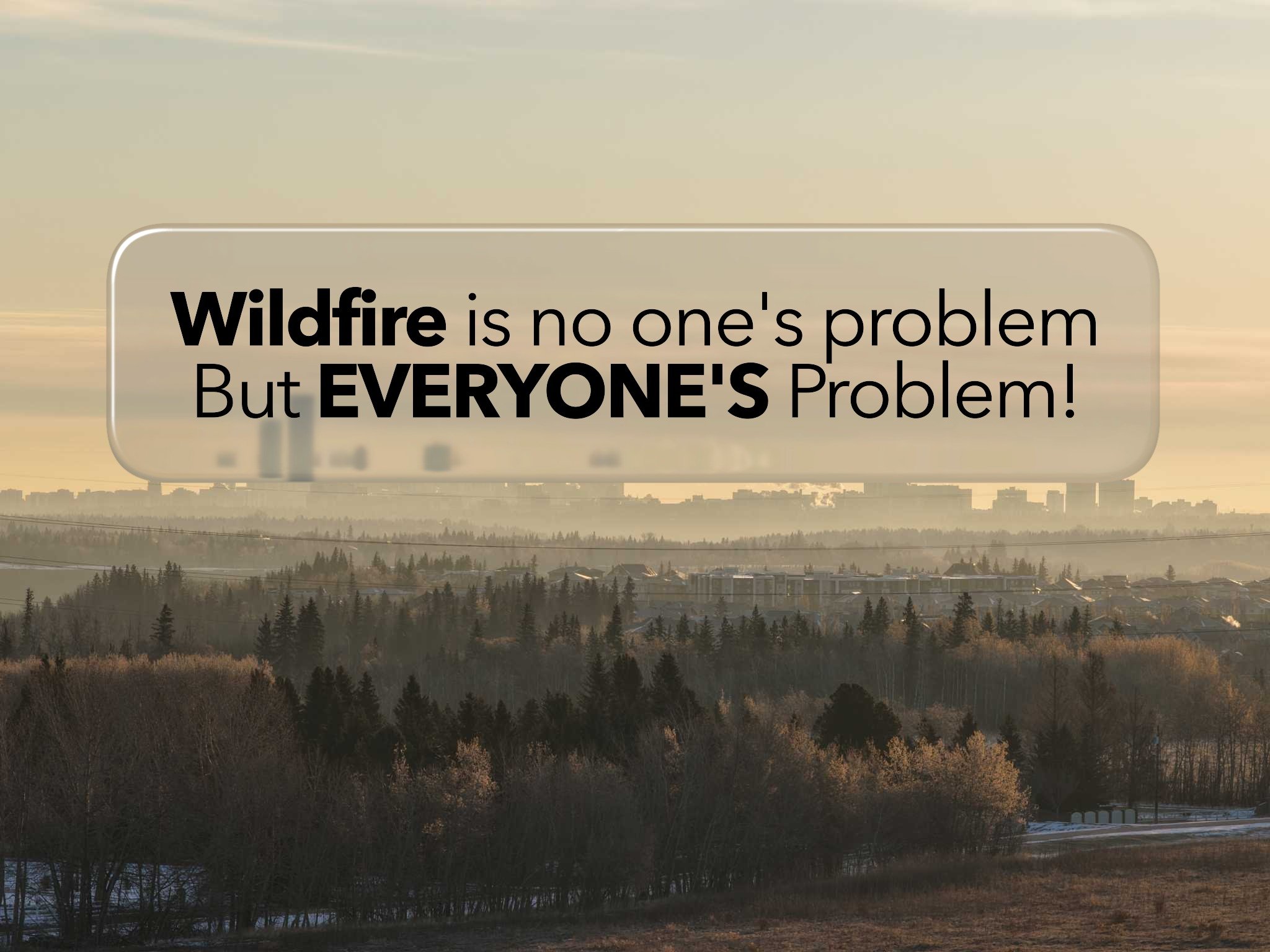

Every year in Alberta, wildfire becomes part of the conversation again.
Sometimes it is front-page news. Sometimes it is smoke in the air. Sometimes it is evacuation alerts, damaged property, disrupted work, cancelled events, or communities trying to make decisions with limited time and limited information.
That was the backdrop for a recent fireside chat hosted at Edmonton Unlimited called Built Here, Built Together, focused on how Edmonton companies are working together to solve real-world wildfire challenges. The panel included Nafaa Haddou from FireSafe AI, Lindsay Mohr from AIRmarket, Andrea Urbina from ELIXR Simulations, and Callie Lissinna from Wyvern, with Tom Viinikka from Edmonton Unlimited moderating. Edmonton Unlimited described the event as a discussion about wildfire not being a future problem, and how better visibility, earlier intelligence, and stronger coordination matter.
What stood out to me was that this was not a conversation about one company having “the answer.” It was about the reality that wildfire is too large, too complex, and too operationally demanding for one solution to solve by itself.
Wyvern spoke about hyperspectral satellite imagery - data that can see far beyond a normal red, green, and blue image. Wyvern’s own materials describe hyperspectral imaging as a way to identify materials and detect subtle environmental shifts. That type of data can help create a better understanding of fuel types, vegetation, ground conditions, and large areas that would be difficult or expensive to assess from the ground.
AIRmarket brought the drone and airspace perspective. Their work is focused on safely enabling drones in complex operating environments. AIRmarket has described its platform as an airspace utility for the drone economy, combining infrastructure, software, compliance, and real-time surveillance. During the discussion, the point was clear: drones can be incredibly useful in wildfire response, but only if they are safely integrated with crewed aircraft, responders, and regulated airspace.
ELIXR Simulations brought another important layer: training and preparedness. ELIXR is a not-for-profit focused on helping Canada’s extended reality ecosystem grow, including the use of immersive technology for education, training, and complex real-world scenarios. In wildfire and emergency response, simulation matters because you cannot simply create dangerous real-world situations at scale every time you need to train people.
FireSafe AI tied many of these threads together. Their work is focused on proactive wildfire management, early detection, and operational intelligence. FireSafe AI says it was founded to address gaps in proactive wildfire management and early wildfire detection. A recent BetaKit article also reported that FireSafe AI has partnered with Wyvern and AIRmarket to build a more comprehensive fire detection and prevention infrastructure.
One of the strongest takeaways from the discussion was the idea that wildfire is “no one’s problem, but everyone’s problem.”
That line stuck with me.
A municipality may feel the pressure when emergency resources are stretched. An industrial operator may feel it when assets, well sites, access roads, or critical infrastructure are at risk. A homeowner may feel it when smoke fills the air or evacuation becomes real. A business may feel it when operations are disrupted. A responder may feel it at 2:00 AM when decisions need to be made quickly and clearly.
The technology is impressive, but the real challenge is helping more people understand what is already possible. Earlier detection. Better visibility. Safer drone operations. Satellite data. Ground-level intelligence. Simulated training. More informed decisions before, during, and after a wildfire event.
From my own perspective at Raven Drone Services, this is where I see a meaningful opportunity to help. Not by pretending we are wildfire experts or replacing the companies doing this critical work, but by helping tell the story visually.
Drone imagery, mapping, site visuals, infrastructure documentation, short educational videos, and visual explainers can help municipalities, industry groups, Indigenous communities, property owners, and decision-makers better understand what these technologies do and why they matter.
Sometimes the barrier is that the right people have not seen it, understood it, or connected it to their own risk yet.
Another theme that came through strongly was collaboration. Each company on the panel had a different role: satellites, drones, airspace, simulation, AI, data fusion, and operational intelligence. The value comes from connecting those pieces into something usable.
We have local companies building serious technology for serious problems. FireSafe AI is based in Edmonton. Wyvern is an Edmonton-based space data company. AIRmarket is building drone airspace infrastructure from Alberta. ELIXR is helping build Canada’s XR and simulation ecosystem from Edmonton.
The event was a good reminder that innovation does not always look like a shiny demo. Sometimes it looks like founders, operators, regulators, responders, municipalities, industry partners, and technology companies working through difficult problems before the emergency happens.
The question is whether we keep treating it as a seasonal crisis, or whether we start treating awareness, prevention, detection, training, and coordination as year-round work.
After hearing this panel, I think the better answer is obvious.
We need to keep this conversation going before the smoke is already in the air.
If you have been thinking about Aerial Information could be a benefit to you, feel free to reach out for a conversation.